
Best USB Audio Interfaces for PC [With Setup Guide]
If you want to record vocals, connect a professional microphone, produce music, stream games, or improve the sound quality of your recordings, a USB audio interface can make a significant difference. Unlike a standard PC audio port, an audio interface provides dedicated audio inputs, outputs, microphone preamps, and other recording features.
Whether you are a beginner starting a home recording studio or an experienced musician working with multiple instruments, choosing the right interface matters. Some models are designed for simple microphone recording, while others offer multiple inputs, MIDI connectivity, advanced monitoring, and professional audio conversion.
In this guide, we will explore nine of the best USB audio interfaces for PC, explain their features, discuss their limitations, and walk you through the setup process.
Note: Your supplied subheading mentions Wi-Fi signal boosters, but that topic does not relate to USB audio interfaces. I have replaced it with the relevant explanation below.
How Do USB Audio Interfaces Work?
A USB audio interface connects microphones, instruments, headphones, and studio monitors to your computer. It converts incoming analog audio signals into digital data that recording software can process. It also converts digital audio from your computer into analog signals for headphones and speakers.
For example, when you connect an XLR microphone, the interface’s microphone preamp boosts its relatively weak signal. If the microphone requires additional power, 48V phantom power supplies it.
The interface then sends the audio to your PC through USB. Software such as Audacity, Ableton Live, FL Studio, and Pro Tools can record and process the incoming sound.
Important specifications include input and output count, microphone preamp quality, sample rate, bit depth, latency, phantom power, and USB compatibility.
9 Best USB Audio Interfaces for PC
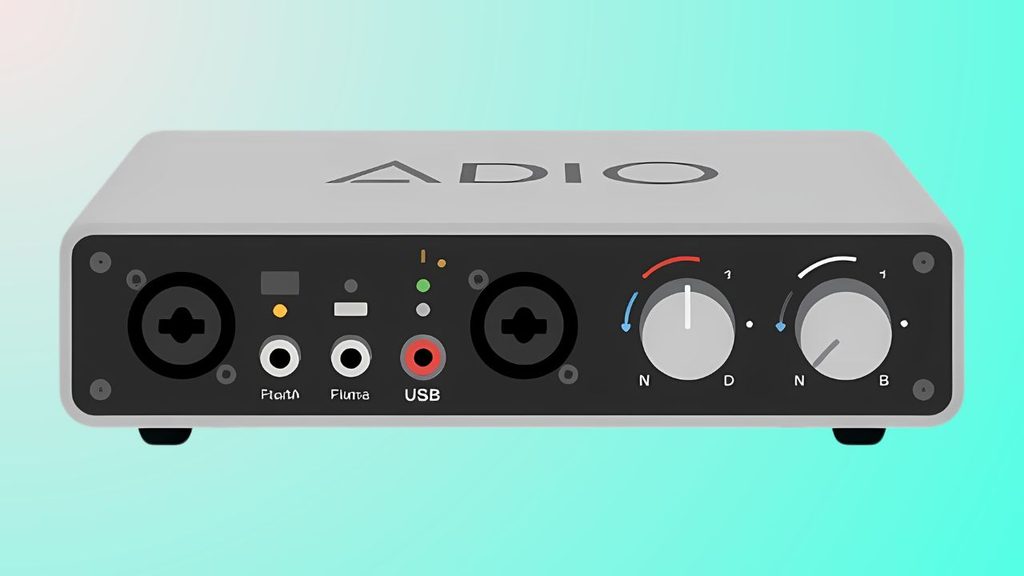
1. Focusrite Scarlett 2i2 4th Gen USB Audio Interface (Best Overall)
- Best overall
- Two-input recording interface
- 4th Generation | USB-C | 24-bit/192 kHz
The Focusrite Scarlett 2i2 4th Gen is an excellent choice for beginners, musicians, podcasters, and content creators who want a reliable audio interface without investing in complicated studio equipment.
It provides two microphone preamps with combined XLR and 1/4-inch inputs. This means you can connect two microphones or use a microphone and an instrument simultaneously. It also supports 48V phantom power, making it compatible with condenser microphones.
One of its most useful features is Auto Gain, which helps you establish suitable recording levels automatically. Its Clip Safe feature monitors your recording levels and adjusts gain when necessary to help prevent clipping. You also get Air Mode, which offers Presence and Harmonic Drive options to change the character of your recordings.
The interface supports 24-bit/192 kHz recording, USB-C connectivity, and headphone monitoring. It works with Windows PCs and is suitable for home recording, streaming, voiceovers, and music production. Focusrite also provides recording software and plugins with the product.
Limitations
| Limitation | Explanation |
| Limited inputs | Only two inputs are available. |
| No MIDI ports | Not suitable for direct MIDI hardware connectivity. |
| Advanced controls | Beginners may need time to understand gain and monitoring settings. |
2. PreSonus AUDIOBOX USB 96 Audio Interface Recording System (Best for Beginners)
- Affordable home recording
- USB 96 | USB 2.0 | 24-bit/96 kHz
The PreSonus AudioBox USB 96 is a practical option if you are building your first home recording setup and want an affordable interface with essential recording features.
It offers two combination microphone and instrument inputs, allowing you to connect microphones, guitars, keyboards, and other compatible audio equipment. Its two Class A microphone preamps provide amplification for microphone recording, while 48V phantom power supports condenser microphones.
Another useful feature is its MIDI input and output connectivity. You can connect compatible MIDI keyboards and controllers directly to the interface. This is helpful if you produce electronic music or work with virtual instruments.
The AudioBox USB 96 supports 24-bit/96 kHz recording and provides balanced main outputs for connecting studio monitors. It also includes a headphone output with a dedicated level control.
Its compact metal construction makes it suitable for desktop recording setups. The interface works with compatible Windows recording software and can be used with PreSonus Studio One and other digital audio workstations.
For beginners, its straightforward controls make it easier to understand microphone gain, input selection, and monitoring without navigating a complicated control panel.
Limitations
| Limitation | Explanation |
| Older USB connection | Uses USB 2.0 rather than USB-C. |
| Recording resolution | Limited to 24-bit/96 kHz. |
| Basic controls | Fewer modern automatic recording features. |
| Limited expansion | Two inputs may not be enough for larger recording sessions. |
3. Audient iD4 2-in/2-out USB Audio Interface (Best for Solo Recording)
- Premium single-microphone setup
- USB-C | 24-bit/96 kHz
The Audient iD4 MKII is designed for people who want high-quality microphone recording without needing several input channels. It is particularly suitable for solo musicians, voiceover artists, streamers, and podcasters.
Its main attraction is the Audient Console microphone preamp, which is designed to deliver clean and detailed audio. The interface includes one XLR microphone input and a separate JFET instrument input. You can connect a microphone or guitar depending on your recording requirements.
The iD4 MKII also offers 48V phantom power, allowing you to use compatible condenser microphones. Its 24-bit/96 kHz converters provide detailed digital recording, while its USB-C connection makes it convenient for modern PC setups.
One feature worth mentioning is the ScrollControl function. It allows the large volume encoder to control certain compatible software parameters when used with the appropriate application. This can make everyday recording and mixing tasks more convenient.
You also get direct monitoring, which helps you listen to incoming audio without depending entirely on software monitoring. Its headphone connectivity is another advantage for people who record vocals and need to monitor their performance.
Limitations
| Limitation | Explanation |
| One microphone input | Not ideal for recording two vocalists simultaneously. |
| No MIDI connectivity | Requires another device for direct MIDI connections. |
| Limited sample rate | Maximum recording resolution is 24-bit/96 kHz. |
| USB requirements | Check USB port and power compatibility before purchasing. |
4. MOTU M2 2×2 USB-C Audio Interface (Best for Streaming and Podcasting)
- Excellent audio monitoring
- USB-C | 24-bit/192 kHz | MIDI
The MOTU M2 is a strong option for streamers, podcasters, musicians, and people who want accurate audio monitoring while recording.
It features two microphone, line, and instrument inputs, allowing you to connect microphones, guitars, and other audio equipment. Both microphone inputs provide 48V phantom power for compatible condenser microphones.
Its most noticeable feature is the full-color LCD display. Instead of relying entirely on small indicator lights, you can monitor input and output levels directly on the screen. This helps you identify signal problems and maintain appropriate recording levels.
The M2 also supports 24-bit/192 kHz recording, balanced monitor outputs, a dedicated headphone output, and MIDI input and output. Another useful feature is loopback, which lets you route computer audio into recording software. This is particularly helpful when recording gameplay, online interviews, or podcast sessions.
MOTU also provides a Windows driver designed for low-latency performance. Its published specifications include a 2.5 ms round-trip latency figure under specific 96 kHz and buffer conditions.
Limitations
| Limitation | Explanation |
| Two inputs | Not designed for large multi-microphone sessions. |
| Driver installation | Windows users should install the manufacturer’s driver. |
| Display size | The LCD is useful but relatively small. |
| Advanced configuration | Loopback routing may take time to understand. |
5. Solid State Logic SSL 2 MKII 2-in 2-out USB Audio Interface (Best for Headphone Monitoring)
- Professional recording features
- USB-C | 32-bit/192 kHz converters
The Solid State Logic SSL 2 MKII is a suitable choice for home studio owners who want professional recording features and high-quality monitoring.
It includes two microphone preamps with combination inputs for microphones, line-level devices, and instruments. The interface supports 48V phantom power and provides dedicated controls for adjusting input gain and monitoring levels.
One of its standout features is the Legacy 4K analogue enhancement circuit. This feature adds a selectable tonal character inspired by SSL’s classic 4000-series consoles. It can be useful when recording vocals, guitars, and other instruments.
The SSL 2 MKII also provides two independent headphone outputs, making it convenient when two people need to monitor a recording session. Its 32-bit/192 kHz converters, balanced monitor outputs, and loopback functionality make it suitable for music production, podcasting, and streaming.
Another advantage is its USB-C connectivity and included USB cable options. It supports Windows 10 and Windows 11 through the manufacturer’s driver and is also compatible with supported macOS versions.
Limitations
| Limitation | Explanation |
| Price | It may cost more than entry-level interfaces. |
| No MIDI ports | Direct MIDI hardware connectivity is unavailable. |
| Two inputs | Larger recording sessions require additional equipment. |
| Learning curve | Some users may need time to understand the 4K feature and monitoring controls. |
6. Behringer U-Phoria UMC202HD 2×2 USB Audio Interface (Best Budget Option)
- Budget-friendly recording
- USB 2.0 | 24-bit/192 kHz
The Behringer U-Phoria UMC202HD is worth considering if you want a relatively affordable audio interface for basic recording and home studio work.
It offers two MIDAS-designed microphone preamps, two combination inputs, and 48V phantom power. You can connect two microphones or use the inputs for compatible instruments and line-level equipment.
Its 24-bit/192 kHz recording support makes it suitable for detailed audio capture. The interface also includes direct monitoring, which lets you listen to your incoming audio without relying entirely on your computer’s processing.
You get balanced main outputs for connecting studio monitors and a dedicated headphone output for private monitoring. Its metal enclosure is another useful feature for people who regularly move their recording equipment between locations.
The UMC202HD is especially useful for beginners who want to record vocals, guitars, podcasts, and simple musical arrangements without spending too much on their first interface.
However, it is important to remember that an affordable interface may not provide the same convenience and software features as newer premium models. Check the available drivers and recording software compatibility before purchasing.
Limitations
| Limitation | Explanation |
| Older connectivity | Uses USB 2.0. |
| Basic interface | Does not offer an advanced display or automatic gain control. |
| Limited inputs | Only two simultaneous input channels. |
| Software experience | Driver and software support should be checked for your Windows version. |
7. Focusrite Scarlett 4i4 4th Gen (Best for Growing Home Studios)
- More connection options
- 4th Generation | USB-C | 24-bit/192 kHz
The Focusrite Scarlett 4i4 4th Gen is a good choice if you need more connectivity than a standard two-input interface can provide.
It provides two microphone preamps, along with additional line-level inputs and multiple outputs. This makes it useful for musicians who work with microphones, synthesizers, keyboards, and other external audio equipment.
Like other fourth-generation Scarlett models, it includes Air Mode, Auto Gain, and Clip Safe features. These tools help you adjust recording levels and achieve a suitable sound without constantly making manual changes.
Its 24-bit/192 kHz recording capability provides high-resolution audio capture. You also get USB-C connectivity, balanced monitor outputs, and additional routing options through Focusrite Control 2.
The 4i4 is particularly useful when your home studio is expanding. For example, you might want to record vocals while connecting external instruments or route different audio signals to separate outputs.
It is also suitable for streaming and podcasting workflows that require additional audio routing flexibility. However, it is important to understand the difference between microphone inputs and line inputs before purchasing.
Limitations
| Limitation | Explanation |
| Higher cost | More expensive than the Scarlett Solo and 2i2. |
| Configuration | Additional routing options require some learning. |
| Microphone channels | Only two dedicated microphone preamps. |
| Not for large studios | Larger recording setups may require an interface with more microphone inputs. |
8. Focusrite Scarlett Solo 4th Gen USB Audio Interface (Best for Solo Musicians)
- Compact recording solution
- 4th Generation | USB-C | 24-bit/192 kHz
The Focusrite Scarlett Solo 4th Gen is designed for people who generally record one microphone or one instrument at a time. It is particularly useful for solo musicians, streamers, voiceover artists, and home recording beginners.
It includes one microphone preamp and a separate instrument input for connecting an electric guitar or bass. You can use the microphone input for vocals and the instrument connection for direct guitar recording.
The interface supports 24-bit/192 kHz recording, 48V phantom power, and USB-C connectivity. It also includes Focusrite’s Air Mode, which provides Presence and Harmonic Drive tonal options.
Two particularly useful features are Auto Gain and Clip Safe. Auto Gain helps establish an appropriate input level, while Clip Safe can adjust gain to reduce the risk of clipping during recording.
The Solo also includes headphone monitoring and balanced outputs for studio speakers. Its compact size makes it convenient for smaller desks and portable recording setups.
If you mainly record yourself speaking, singing, or playing guitar, the Solo provides the essential connections without requiring you to pay for inputs you may never use.
Limitations
| Limitation | Explanation |
| One microphone preamp | Cannot record two XLR microphones simultaneously. |
| No MIDI ports | External MIDI equipment needs another connection. |
| Limited expansion | Not ideal for multi-person podcasting. |
| Single-user focus | Better suited to individual recording sessions. |
9. Solid State Logic SSL 2+ MKII USB-C Audio Interface (Best for Two-Person Recording)
- Expanded headphone connectivity
- USB-C | 32-bit/192 kHz converters
The SSL 2+ MKII is an excellent alternative if you like the recording quality and features of the SSL 2 MKII but need additional connectivity for a more flexible studio setup.
It includes two microphone preamps, combination inputs, and 48V phantom power. You can connect microphones, instruments, and other compatible audio sources for recording.
One of its biggest advantages is the two independent headphone outputs. This is especially useful for podcasting and interviews because both the host and guest can monitor the recording using headphones.
The interface also offers Legacy 4K enhancement, balanced monitor outputs, MIDI connectivity, and loopback functionality. These features make it useful for music production, streaming, and content creation.
Its 32-bit/192 kHz converters support high-resolution recording and playback. The USB-C connection makes it suitable for modern Windows PCs, while the included cables help with different USB port configurations.
The SSL 2+ MKII is a particularly attractive option if you want a compact interface with professional monitoring features and MIDI support.
Limitations
| Limitation | Explanation |
| Price | It is more expensive than many entry-level interfaces. |
| Two mic preamps | Not designed for recording large groups directly. |
| Learning curve | Advanced monitoring and routing features require some practice. |
| Additional features | Some users may not need its extra outputs and MIDI connections. |
Product specifications and compatibility can vary by hardware revision and software version. Check the manufacturer’s product page before purchasing. The recommendations above are based on published specifications and feature suitability, not independent laboratory testing.
Set Up USB Audio Interfaces on PC
Once you have selected an audio interface, the next step is connecting it to your Windows computer. The process is relatively simple, even if you have never used recording equipment before.
Step 1: Connect the Audio Interface to Your PC
First, take the USB cable supplied with your audio interface. Connect one end to the interface and the other end to an available USB port on your computer.
If your interface uses USB-C but your PC has USB-A ports, use a compatible cable or adapter.
Make sure the connection is secure. Avoid using an unreliable USB hub because it can sometimes cause connection or power problems.
Step 2: Download and Install the Required Drivers
Visit the manufacturer’s official website and open its support or downloads section.
Search for your exact audio interface model and download the latest compatible Windows driver and control software.
For example, Focusrite users can download the appropriate driver and Focusrite Control software. Installing the manufacturer’s driver is recommended for reliable operation and low-latency ASIO recording.
Follow the installation instructions and restart your computer if requested.
Step 3: Connect Your Microphone or Instrument
Now connect your recording equipment.
If you have an XLR microphone, connect it to the microphone input using an XLR cable. For an electric guitar, use the appropriate instrument input.
If you are using a condenser microphone, enable 48V phantom power when required by the microphone manufacturer. Do not enable it unnecessarily for equipment that does not require it.
Step 4: Connect Your Headphones or Speakers
Connect your headphones to the interface’s headphone output.
If you have studio monitors, connect them to the interface’s balanced output connections using compatible cables.
Adjust the headphone and monitor volume controls before playing audio to avoid unexpectedly loud sound.
Step 5: Select the Interface in Windows 11 or 10
Open Settings on your PC and navigate to System > Sound.
Under the Output section, select your USB audio interface as the playback device.
Next, find the Input section and select the same interface as your recording device.
You can also open the sound settings in your recording application and select the interface as its audio input and output device.
Step 6: Configure Your Recording Software
Open your preferred recording application, such as Audacity, FL Studio, Ableton Live, or another compatible DAW.
Open its audio settings and select the manufacturer’s ASIO driver on Windows when available. ASIO generally provides better low-latency recording performance than standard Windows audio drivers.
Choose a suitable sample rate, such as 44.1 kHz or 48 kHz, and begin with a buffer size of 128 or 256 samples.
Step 7: Test Your Audio Interface
Finally, speak into your microphone or play your instrument.
Check the interface’s input indicators to confirm that it receives an audio signal. Make sure the recording software also displays incoming audio levels.
Start with a low microphone gain and increase it gradually. Avoid allowing the signal to reach the clipping or red zone.
If everything works correctly, record a short test and play it back through your headphones.
FAQs
1. Do USB audio interfaces work with Windows 11?
Yes. Most modern USB audio interfaces support Windows 11. However, you should check the manufacturer’s compatibility information and install the appropriate drivers.
2. Do I need an audio interface for a USB microphone?
No. A USB microphone already contains the necessary audio conversion hardware to connect directly to your PC. An external audio interface is generally intended for XLR microphones, instruments, and other professional audio equipment.
3. Which USB audio interface is best for beginners?
The Focusrite Scarlett 2i2 4th Gen is an excellent starting point because it provides two microphone inputs, automatic gain assistance, and straightforward controls.
The PreSonus AudioBox USB 96 and Behringer UMC202HD are also worth considering if you want a more budget-friendly setup.
4. What is phantom power in an audio interface?
48V phantom power supplies electrical power to compatible condenser microphones through an XLR cable. Not every microphone requires it, so check your microphone’s specifications before enabling it.
5. Does an audio interface improve microphone sound quality?
Yes, it can. A good interface provides quality microphone preamps and digital audio converters that help capture cleaner recordings. However, your microphone, room acoustics, recording technique, and software settings also affect the final result.
6. What is the difference between USB 2.0 and USB-C audio interfaces?
USB 2.0 refers to a USB data-transfer standard, while USB-C describes a physical connector type. An interface can use USB 2.0 technology through a USB-C connector. Therefore, USB-C does not automatically mean better recording quality.
7. What sample rate should I use for recording?
For most home recording, 24-bit/48 kHz is a practical setting. It provides excellent quality for music, podcasts, voiceovers, and video production without unnecessarily increasing file sizes.
Summary
Choosing the right USB audio interface for PC depends on your recording requirements, budget, and the number of microphones or instruments you want to connect.
The Focusrite Scarlett 2i2 4th Gen is a great all-around option, while the MOTU M2 is particularly useful for streaming and podcasting. If you want professional monitoring features, consider the SSL 2 MKII. For affordable home recording, the PreSonus AudioBox USB 96 and Behringer U-Phoria UMC202HD are worth exploring.
Before purchasing, check the number of inputs, microphone preamps, phantom power, USB compatibility, and Windows driver support.
Once connected and configured correctly, a USB audio interface can make your PC a much more capable recording workstation.