
Inkjet vs. Laser: Which Is More Cost-Effective for High-Volume Printing in 2026?
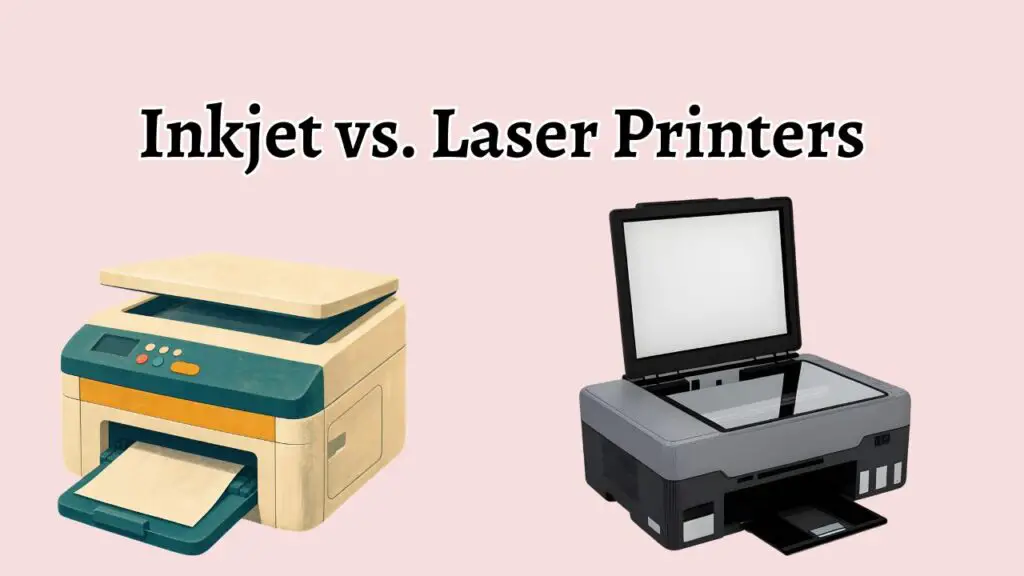
Inkjet vs. Laser Printers: Choosing the right printer is no longer just about buying the least expensive model. In 2026, printing technology has become more efficient, smarter, and more affordable than ever before. Whether you print hundreds of school assignments every month, manage office paperwork, or run a small business that relies on invoices, reports, and shipping labels, selecting the right printer can significantly reduce your long-term printing costs.
The biggest question most buyers ask is whether they should purchase an inkjet printer or a laser printer. While both technologies have improved considerably over the years, they are designed for different workloads and printing requirements. The purchase price is only one part of the equation. You also need to consider printing speed, page yield, replacement cartridge costs, maintenance, electricity usage, and the overall cost per page.
This guide explains the differences between inkjet and laser printers, recommends some of the best models available in 2026, and compares their strengths.
Inkjet Printers
An inkjet printer creates documents and images by spraying microscopic droplets of liquid ink onto paper. Modern inkjet printers are far more advanced than older generations, offering impressive print quality, faster speeds, wireless connectivity, automatic duplex printing, and even refillable ink tank systems that dramatically reduce printing costs.
One of the biggest advantages of an inkjet printer is its outstanding color accuracy. If you regularly print photographs, colorful presentations, marketing brochures, artwork, or classroom projects, an inkjet printer usually produces richer colors and smoother gradients than a standard laser printer.
Another major improvement in recent years has been the popularity of ink tank printers. Instead of replacing expensive cartridges frequently, these printers use refillable ink bottles capable of printing thousands of pages before needing another refill. This significantly lowers the overall printing cost, making them much more practical for users with higher printing volumes.
Inkjet printers also tend to have a lower initial purchase price, making them attractive for home users and small offices. They usually occupy less desk space and consume relatively little power during operation.
However, inkjet printers still have some limitations. Liquid ink can dry out if the printer sits unused for several weeks. Printing large batches of documents may also take longer compared to laser printers. Heavy monthly printing can increase maintenance requirements if print heads require cleaning.
Overall, today’s ink tank printers have narrowed the cost gap between inkjet and laser technology. For users who need excellent color printing along with reasonable operating costs, they remain an excellent investment.
Laser Printers
A laser printer uses toner powder, a laser beam, and a heated fuser unit to create printed pages. Instead of liquid ink, toner is transferred onto paper and permanently fused using heat. This process produces sharp text, crisp graphics, and extremely consistent print quality.
Laser printers have traditionally been the preferred choice for businesses because they excel at high-volume document printing. They print much faster than most inkjet models and can handle large workloads without significant slowdowns.
One of the biggest advantages of laser printing is its low cost per monochrome page. Toner cartridges generally print several thousand pages before replacement, reducing interruptions and improving productivity.
Laser printers also require less maintenance because toner does not dry out. If you leave a laser printer unused for several months, it usually resumes printing immediately without requiring cleaning cycles.
Another advantage is durability. Printed pages resist smudging and moisture better than standard inkjet prints because the toner is heat-bonded to the paper.
The primary disadvantage is the higher purchase price, especially for color laser printers. Replacement toner cartridges can also be expensive, although they last much longer than standard ink cartridges.
If your daily workload mainly consists of contracts, reports, spreadsheets, invoices, legal documents, manuals, and school paperwork, a laser printer often delivers the lowest long-term operating costs.
My List of Best Inkjet Printers for Home/Office 2026
Epson EcoTank ET-4850
The Epson EcoTank ET-4850 remains one of the strongest choices for home offices and small businesses in 2026. Instead of traditional cartridges, it uses refillable ink tanks that can produce thousands of pages before requiring additional ink. This dramatically lowers the printing cost over time and reduces plastic waste.
The printer supports wireless printing, automatic duplex printing, scanning, copying, and faxing, making it suitable for both personal and professional use.
Print quality is excellent for both color graphics and everyday documents, while the automatic document feeder improves productivity during scanning jobs. The compact design also fits comfortably in most workspaces.
Why I have considered it in my list is because it combines outstanding print quality, low running costs, dependable performance, and excellent page yield. For users printing several hundred or even a few thousand pages each month, it provides one of the best balances between affordability and long-term savings.
Canon MAXIFY GX6021
The Canon MAXIFY GX6021 is designed for users who print frequently but still require exceptional color quality. Its refillable MegaTank system delivers a remarkably low cost per page while maintaining impressive print sharpness.
Business documents, presentations, marketing materials, and photographs all benefit from Canon’s advanced color technology. Automatic duplex printing, wireless connectivity, mobile printing, and a generous paper capacity help reduce interruptions during busy workdays.
The printer is also engineered for reliable monthly workloads, making it suitable for growing businesses.
Why I have considered it in my list is because it offers excellent reliability, high page yields, strong color performance, and low maintenance costs. Anyone looking for an economical all-around inkjet printer that handles both business and creative projects efficiently will find this model to be a dependable long-term investment.
My List of Best Laser Printers for Home/Office 2026
Brother HL-L2460DW
The Brother HL-L2460DW is an outstanding monochrome laser printer for users whose primary focus is document printing. It delivers fast print speeds, crisp text quality, wireless connectivity, automatic duplex printing, and dependable monthly performance.
Toner cartridges provide excellent page yields, helping reduce overall operating expenses for users who print frequently. The printer also offers a compact footprint, making it ideal for home offices with limited desk space.
Its straightforward setup and reliable paper handling contribute to a smooth user experience even during larger print jobs.
Why I have considered it in my list is because it consistently delivers exceptional value for high-volume black-and-white printing. Its combination of affordable toner costs, dependable reliability, fast output, and low maintenance requirements makes it one of the strongest laser printer choices available in 2026.
HP Color LaserJet Pro 4301fdw
The HP Color LaserJet Pro 4301fdw is an excellent option for businesses that require both high-speed monochrome printing and professional-quality color output. It includes printing, scanning, copying, and fax capabilities, making it a complete office solution.
Automatic duplex printing, advanced security features, wireless networking, cloud printing, and a high duty cycle allow the printer to handle demanding daily workloads with ease. Text appears exceptionally sharp, while charts, presentations, and marketing materials maintain consistent color quality.
I have considered it for my list because it offers an outstanding balance of productivity, print quality, durability, and business-focused features. Although its purchase price is higher than many inkjet printers, the long-term reliability and impressive performance make it a worthwhile investment for busy offices.
Comparison Table
| Feature | Inkjet Printer | Laser Printer |
| Purchase Price | Usually lower | Usually higher |
| Printing Technology | Liquid ink | Toner powder |
| Best For | Photos, graphics, mixed printing | Text documents, reports, invoices |
| Color Printing | Excellent | Very good |
| Black and White Printing | Very good | Excellent |
| Printing Speed | Moderate | Fast |
| Monthly Print Volume | Low to high depending on ink tank model | Medium to very high |
| Maintenance | Print heads may require cleaning | Minimal maintenance |
| Cost Per Page | Very low with ink tank printers | Very low for monochrome printing |
| Page Yield | High with refillable tanks | Very high with toner cartridges |
| Energy Consumption | Lower | Slightly higher due to fuser heating |
| Best Choice for High Volume Documents | Good | Excellent |
Which Is More Cost Effective for High Volume Printing?
When comparing inkjet and laser printers for high volume printing in 2026, there is no single answer that fits every user. The most cost-effective option depends on the type of documents you print, your monthly print volume, and your long-term operating costs rather than the printer’s purchase price.
If you primarily print black and white documents such as reports, invoices, contracts, spreadsheets, or school assignments, a laser printer is generally the more cost-effective choice. Laser printers produce pages much faster, require less maintenance, and use high-yield toner cartridges that can print thousands of pages before replacement. Their cost per page is usually lower for monochrome printing, making them ideal for offices and businesses with heavy workloads.
However, if you regularly print color documents, presentations, brochures, graphics, or photographs, a modern ink tank printer can be the better investment. Unlike traditional cartridge-based inkjet printers, refillable ink tank models have dramatically reduced printing costs. Many can print several thousand color pages from a single set of ink bottles, making them highly economical for users who need frequent color printing.
For home users, students, teachers, and small businesses with mixed printing needs, an ink tank printer often provides the best balance between affordability and versatility. It offers excellent photo quality while keeping operating expenses relatively low.
For medium-sized and large offices that print hundreds or thousands of text documents every month, a monochrome laser printer remains the clear winner. Its faster print speeds, consistent performance, lower maintenance requirements, and excellent toner yields help reduce both downtime and long-term printing expenses.
Overall, laser printers remain the most cost-effective solution for high-volume black and white printing, while ink tank printers are now the most economical choice for high-volume color printing. Before making your purchase, compare the total cost of ownership, including the printer price, consumables, page yield, maintenance, and expected monthly printing volume, to ensure you select the printer that provides the greatest long-term value.
Additional Tips
Before purchasing a printer, estimate how many pages you print every month instead of focusing only on the purchase price. A printer with a slightly higher upfront cost may save hundreds of dollars over several years through lower operating expenses.
Always compare the cost per page instead of simply checking cartridge prices. High-yield ink bottles and toner cartridges usually provide much better long-term value.
If your work includes photographs, colorful brochures, classroom materials, or creative projects, a modern ink tank printer is often the better investment.
If you mainly print contracts, invoices, reports, forms, and spreadsheets every day, a laser printer will usually offer faster performance and lower maintenance.
Use genuine consumables whenever possible because compatible supplies can sometimes affect print quality or reduce printer reliability.
Keeping your printer firmware updated can improve security, compatibility, and overall performance throughout its lifespan.
FAQs
Which printer is cheaper to operate for high volume printing?
For monochrome documents, laser printers generally have the lowest operating costs. However, refillable ink tank printers now offer extremely competitive costs, especially for users who frequently print in color.
Are ink tank printers better than cartridge printers?
Yes. Ink tank printers usually produce a much lower cost per page, require fewer refills, and are better suited for users who print regularly.
Do laser printers print faster than inkjet printers?
Yes. Most laser printers produce documents significantly faster, making them ideal for offices with continuous printing needs.
Which printer is better for photographs?
An inkjet printer typically produces superior photo quality because it delivers smoother color transitions and more accurate color reproduction.
Which printer lasts longer?
Both printer types can last for many years with proper maintenance. Laser printers are often preferred for demanding office environments because they handle heavy workloads more consistently.
Summary
Both inkjet and laser printers have become much more efficient in 2026, but the right choice depends on your printing habits. If you regularly print colorful documents, photographs, and creative projects, a refillable ink tank printer provides exceptional quality with surprisingly low operating costs.
On the other hand, if your workload primarily consists of thousands of black and white documents every month, a laser printer remains the most cost-effective option thanks to its fast speeds, high toner yields, and minimal maintenance requirements.
Rather than focusing solely on the purchase price, consider the total cost of ownership, including consumables, maintenance, page yield, and monthly printing volume.
Making your decision based on these factors will help ensure you choose a printer that delivers reliable performance and long-term savings for both home and office use.