
What is a Pedometer on a Smart Watch? How does it work?
If you’ve ever glanced at your smartwatch and noticed a step count ticking upward throughout the day, you’ve already interacted with one of its most fundamental features, the pedometer. Whether you’re using an Apple Watch Series 9, a Samsung Galaxy Watch 6, or something from Fitbit, step tracking sits at the core of the entire fitness experience.
A pedometer is more than just a digital step counter. It’s part of a larger system that helps you monitor daily movement, stay active, and even improve your long-term health habits. In modern smartwatches, pedometers have evolved far beyond the basic clip-on devices people used years ago. They now use advanced sensors, machine learning, and motion analysis to deliver surprisingly accurate results.
This guide walks you through what a pedometer on a smartwatch actually is, how it works under the hood, and how you can make the most of it in your daily routine.
What is a Pedometer on a Smart Watch?
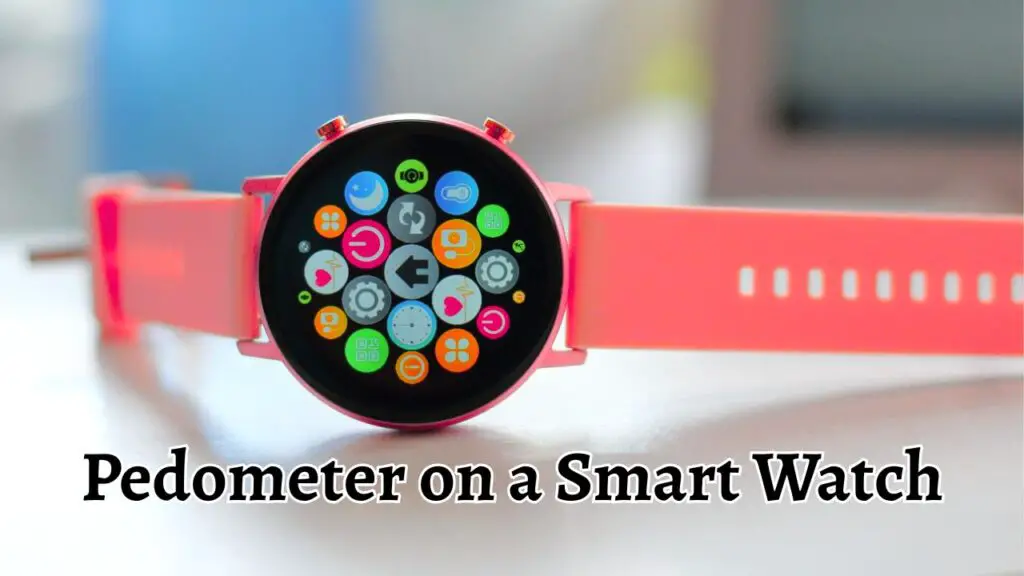
A pedometer on a smartwatch is a built-in digital feature that automatically tracks the number of steps you take throughout the day. It uses motion sensors inside the watch to detect your physical movement and convert it into step data.
At its simplest level, a pedometer answers one key question: how much did you move today?
Unlike traditional standalone pedometers, smartwatch pedometers are integrated into a full ecosystem. That means your step count is often combined with other metrics, such as distance traveled, calories burned, heart rate, and activity trends. This creates a more complete picture of your health and fitness.
Most smartwatches come with a dedicated fitness app, such as Apple’s Fitness app or Samsung Health. These apps display your step count in real time, set daily goals, and even send reminders if you’ve been inactive for too long.
What makes smartwatch pedometers particularly powerful is their ability to adapt. They can distinguish between walking, running, and even casual hand movements. Over time, they learn your patterns and become more accurate.
How a Pedometer Works on a Smart Watch?
A pedometer on a smartwatch works by using built-in sensors like an accelerometer and sometimes a gyroscope to detect motion. These sensors measure movement patterns, identify step-like motions, and convert them into a step count using software algorithms.
To really understand how a smartwatch pedometer works, you need to look at both the hardware and the software working together.
At the hardware level, the key component is the accelerometer. This is a tiny sensor that detects changes in motion and orientation. Every time you move your arm while walking, the accelerometer records that motion as a series of signals.
Some smartwatches also include a gyroscope, which adds another layer of motion tracking by measuring rotation. This helps the device better understand complex movements and improve accuracy.
But raw motion data alone is not enough. This is where software comes in. The smartwatch uses algorithms to analyze the motion data and determine whether it matches the pattern of a step. For example, walking produces a rhythmic, repetitive motion that the algorithm can recognize.
Modern smartwatches go even further by using machine learning models. These models are trained on large datasets of human movement, allowing them to distinguish between actual steps and random movements like waving your hand or typing on a keyboard.
Another important factor is calibration. When you first set up your smartwatch, you typically enter details like your height, weight, and stride length. This information helps the pedometer calculate distance and calories more accurately.
The result is a system that continuously tracks your movement in real time, filters out noise, and delivers a reliable step count.
Step-by-Step Process of How a Smartwatch Pedometer Tracks Your Movement
Step 1: Detecting Motion Through Sensors
The process begins with the smartwatch’s internal sensors constantly monitoring your movement. The accelerometer tracks acceleration in different directions, capturing even subtle shifts in motion. Every time your wrist moves, data is recorded.
This happens silently in the background. You do not need to activate anything manually. The sensors are always on, optimized to use minimal battery while still collecting useful data.
Step 2: Converting Motion into Digital Signals
Once motion is detected, the smartwatch converts these physical movements into digital signals. These signals represent the intensity, direction, and frequency of your movement.
For example, a walking motion produces a consistent pattern of peaks and valleys in the data. This pattern becomes the foundation for identifying steps.
Step 3: Filtering Noise and Irrelevant Movements
Not every movement counts as a step. If you are typing, cooking, or gesturing while talking, your wrist is still moving. The smartwatch needs to filter out these non-step motions.
This is done using advanced filtering techniques and algorithms. The system looks for specific patterns that match walking or running. Irregular or inconsistent movements are ignored.
This step is critical for accuracy. Without it, your step count would be inflated with false positives.
Step 4: Identifying Step Patterns
After filtering out noise, the smartwatch analyzes the remaining data to identify step patterns. Walking and running both produce rhythmic, repetitive motions that are easy to distinguish from other activities.
The algorithm detects these patterns and counts each valid repetition as a step. Over time, the system becomes better at recognizing your unique movement style.
Step 5: Calculating Distance and Calories
Once steps are counted, the smartwatch uses additional data to estimate distance traveled and calories burned. This is where your personal information, such as height and weight, comes into play.
For distance, the watch multiplies your step count by your estimated stride length. For calories, it considers factors like activity intensity and duration.
This transforms simple step data into meaningful health insights.
Step 6: Syncing Data with Apps and Cloud Services
The final step involves syncing your data with companion apps on your smartphone. Whether you are using Apple Fitness or Samsung Health, your step data is stored, analyzed, and displayed in an easy-to-read format.
This also allows you to track trends over time, set goals, and even compete with friends.
FAQs
What is the main purpose of a pedometer on a smartwatch?
The main purpose is to track your daily steps and encourage physical activity. It helps you stay aware of your movement levels and motivates you to reach fitness goals.
How accurate is a smartwatch pedometer?
Most modern smartwatch pedometers are highly accurate, often within 90 to 95 percent of actual steps. Accuracy can vary depending on how you wear the watch and your movement patterns.
Can a pedometer work without internet?
Yes, the pedometer works offline because it relies on internal sensors. However, syncing data with apps or cloud services may require an internet connection.
Does arm movement affect step counting?
Yes, since the pedometer relies on wrist movement, excessive or unusual arm motions can sometimes affect accuracy. Advanced algorithms help minimize this issue.
Do all smartwatches have a pedometer?
Almost all modern smartwatches include a built-in pedometer. It is considered a standard feature in devices focused on health and fitness.
How can I improve pedometer accuracy?
Wearing the watch properly on your wrist, keeping your personal data updated, and regularly calibrating the device can improve accuracy.